Other Briefings
What Manufacturers Should Evaluate Before Establishing Factory in Vietnam
Establishing factory operations in Vietnam requires manufacturers to evaluate more than labor and industrial land costs. Explore the key questions businesses should consider regarding factory models, industrial park leases, payroll obligations, compliance requirements, and logistics efficiency before investing in Vietnam.

Vietnam continues to attract manufacturers seeking competitive production costs, expanding trade connectivity, and diversified supply chains. However, the total cost of operating a factory in Vietnam extends far beyond labor and industrial land pricing.
Factory model selection, industrial park terms, compliance obligations, logistics efficiency, and long-term workforce costs can materially affect project economics over time. Manufacturers that evaluate these factors early are generally better positioned to control operational risk and protect margins as Vietnam’s manufacturing landscape evolves.
Which factory model best fits the investment strategy?
The choice between a ready-built factory (RBF), a build-to-suit facility, or a greenfield project directly affects setup costs, implementation timelines, and operational flexibility.
RBFs typically reduce upfront capital expenditure and accelerate market entry, while greenfield projects offer greater control over factory design and production layout. Build-to-suit arrangements may provide a balance between customization and deployment speed.
Manufacturers should align the factory model with production complexity, expected expansion needs, and investment horizon.
How does location affect manufacturing costs?
Location remains one of the most important cost variables in Vietnam’s manufacturing operations.
Northern, central, and southern Vietnam each offer different advantages in labor availability, supplier ecosystems, and logistics connectivity. Industrial parks near major hubs such as Ho Chi Minh City and Hanoi generally command higher lease rates, while emerging provinces may offer lower land costs but weaker supply chain integration.
In practice, manufacturers should evaluate total operating costs rather than lease pricing alone.
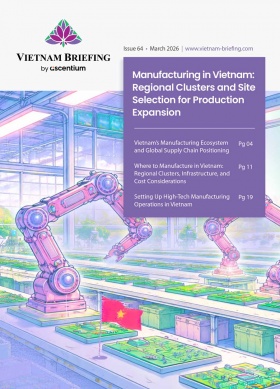
See also: Where to Manufacture in Vietnam
Do sector-specific requirements increase operating costs?
Certain industries face significantly higher infrastructure and compliance costs than standard light manufacturing operations.
Sectors such as pharmaceuticals, electronics, and chemicals often require enhanced fire safety systems, environmental safeguards, utility infrastructure, and waste treatment capabilities. These requirements can increase both initial setup expenditure and recurring operational costs.
Manufacturers should assess regulatory obligations early during site selection and facility planning.
See also: Vietnam Manufacturing Cost Planning
What recurring costs should manufacturers monitor after launch?
Once operations begin, recurring expenses can gradually reduce margins if not monitored closely.
Key cost areas include:
- Utilities and electricity consumption;
- Facility management and maintenance;
- Workforce and payroll expenses;
- Statutory employment contributions; and
- Logistics and transportation costs.
Energy-intensive operations should pay particular attention to electricity pricing structures and peak demand exposure, while long-term budgeting should account for inflation and wage growth.
Which statutory payroll costs should be included in budgeting?
Manufacturers must budget for mandatory employment contributions in addition to salaries.
These typically include:
- Social insurance;
- Health insurance;
- Unemployment insurance; and
- Trade union dues.
Businesses should incorporate wage escalation assumptions into multi-year financial planning rather than relying solely on current payroll levels.
Which industrial park and lease terms require closer review?
Headline rental pricing rarely reflects the full cost of industrial occupancy in Vietnam.
Manufacturers should review rent escalation mechanisms, service fee coverage, utility pricing terms, capacity limitations, and surcharge conditions before signing lease agreements. Contract provisions governing fit-out responsibilities, repairs, renewals, subleasing rights, and early termination should also be clarified in advance.
Manufacturers planning long-term operations should additionally confirm whether adjacent expansion space remains available, as relocation after launch can significantly increase costs and operational disruption.
See also: A Step-by-Step Guide to Start Manufacturing in Vietnam
Optimizing Manufacturing Location Strategy in Vietnam
Choosing the right factory location in Vietnam requires balancing labor availability, industrial park conditions, supplier ecosystems, infrastructure access, and long-term operating costs.
Dezan Shira & Associates’ Location Analysis and Site Selection Services help manufacturers evaluate industrial zones, compare regional cost structures, and identify locations aligned with operational and supply chain requirements.
How should manufacturers evaluate logistics and supply chain costs?
Factory location should be assessed against supplier networks, customer proximity, ports, airports, and border access from the earliest planning stage.
Lower industrial rent in remote provinces may increase freight expenses, delivery lead times, and inventory holding costs. Manufacturers should also account for customs brokerage, warehousing, trucking, port handling charges, and document processing fees.
Businesses operating across multiple currencies should evaluate foreign exchange exposure and align supplier payment terms with operating cash flow cycles.
Ultimately, manufacturers that balance labor access, logistics connectivity, supplier depth, and customer proximity tend to achieve stronger long-term cost efficiency than those prioritizing rent reduction alone.
See also: Vietnam’s Manufacturing Ecosystem and Global Supply Chain Positioning



For international investors, Vietnam's different localities offer favorable conditions across almost every sector, particularly as the country shifts toward higher value-chain manufacturing, high-tech industries, and innovation. Taking a closer look at Vietnam's provinces and investment destinations before committing capital can provide a decisive competitive advantage. A tailored market study, dedicated location selection, or business matchmaking can uncover factors that are often hard to assess—such as special incentives, skilled labor availability, and tax breaks.
About Us
Vietnam Briefing is one of five regional publications under the Asia Briefing brand. It is supported by Dezan Shira & Associates, a pan-Asia, multi-disciplinary professional services firm that assists foreign investors throughout Asia, including through offices in Hanoi, Ho Chi Minh City, and Da Nang in Vietnam. Dezan Shira & Associates also maintains offices or has alliance partners assisting foreign investors in China, Hong Kong SAR, Indonesia, Singapore, Malaysia, Mongolia, Dubai (UAE), Japan, South Korea, Nepal, The Philippines, Sri Lanka, Thailand, Italy, Germany, Bangladesh, Australia, United States, and United Kingdom and Ireland.
For a complimentary subscription to Vietnam Briefing’s content products, please click here. For support with establishing a business in Vietnam or for assistance in analyzing and entering markets, please contact the firm at vietnam@dezshira.com or visit us at www.dezshira.com
- Previous Article Complying with Vietnam’s Electronic Labor Contract Framework: Circular 08/2026
- Next Article