Other Briefings
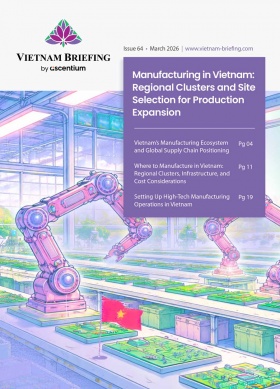
Setting Up High-Tech Manufacturing Operations in Vietnam
For foreign investors, establishing a manufacturing facility in Vietnam requires careful planning across site selection, regulatory compliance, and operational feasibility.
Key takeaways
- Vietnam offers multiple factory setup options, with ready-built factories enabling faster market entry and lower upfront investment.
- Regulatory compliance remains essential, including licensing, environmental approvals, and fire safety requirements before operations can commence. Recent policy and trade developments are reshaping manufacturing location strategies, from provincial restructuring to evolving global trade dynamics.
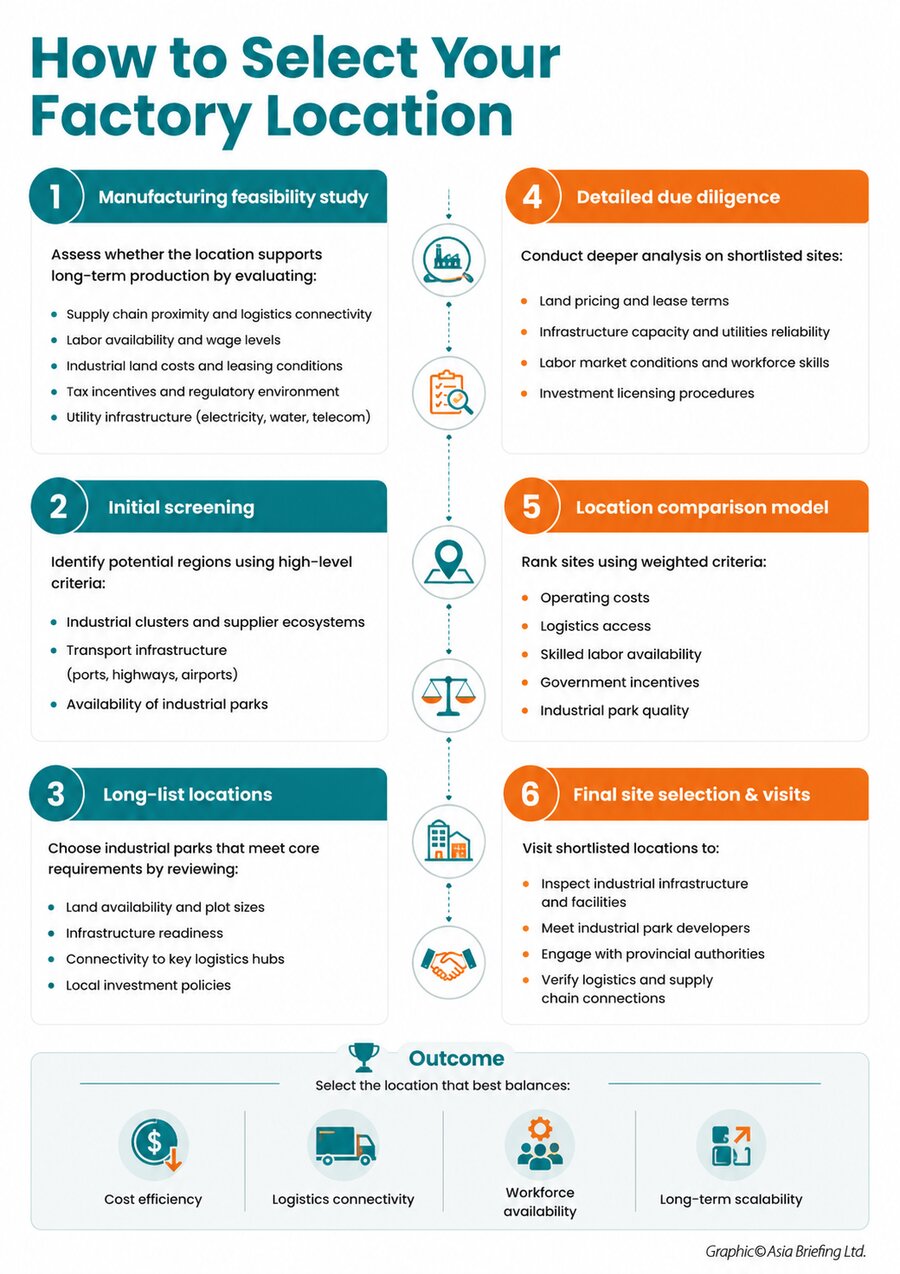
- A structured site selection process helps manufacturers reduce risks, optimise costs, and build resilient, scalable operations in Vietnam.
Setting up manufacturing facilities in Vietnam
Foreign manufacturers entering Vietnam typically establish production facilities through two primary approaches: leasing industrial land to build a factory or renting a ready-built factory (RBF) within an industrial park.
Leasing industrial land
Leasing industrial land provides full control over factory design and production layout but involves higher upfront investment and longer timelines. Investors must secure land-use rights, obtain construction permits, and complete facility development, a process that can take 12 to 18 months.
Renting a Ready-Built Factory (RBF)

Unlike land leasing, renting an RBF offers a faster and more flexible entry option. These facilities are pre-constructed and managed by industrial park developers, allowing manufacturers to begin operations more quickly, typically within six to nine months. As a result, RBFs have become increasingly popular among foreign investors seeking to establish production capacity rapidly while minimising capital expenditure.
Before committing to a factory rental, companies should conduct:
-
Market and location research, evaluating industrial zones based on logistics connectivity, infrastructure quality, and proximity to ports, airports, and suppliers.
-
Legal due diligence, verifying land-use rights, environmental permits, and zoning compliance.
-
Lease negotiations, covering rental rates, contract duration, and additional costs such as maintenance and utilities.
-
Infrastructure and workforce assessments, ensuring reliable utilities and sufficient local labour availability.
Once a facility is selected, investors typically sign a memorandum of understanding (MoU) and provide a deposit to reserve the property before finalising the lease agreement. Following this, companies must complete several regulatory steps before production begins, including establishing a local legal entity, obtaining fire safety approvals, securing environmental permits where required, and importing and installing machinery.
For many investors, the RBF model offers an efficient pathway to enter Vietnam’s manufacturing sector while maintaining flexibility for future expansion.
Notable trends affecting location selection
Trade policy developments and tariff adjustments
Trade policy developments and tariff changes are increasingly influencing manufacturing location choices, especially for export-focused investors considering supply chain resilience and market access. Despite global uncertainties, the trend of foreign manufacturers in Vietnam planning to expand over the next two years remains strong.
Industrial land absorption rates in both northern and southern regions remain below historical averages, helping to keep rental prices relatively stable and providing investors with greater flexibility when selecting locations. At the same time, demand for ready-built factories (RBFs) and ready-built warehouses (RBWs) is increasing, particularly in southern Vietnam, as companies seek faster market entry and greater operational flexibility amid evolving trade conditions.
Administrative decentralisation and provincial restructuring
The operation of newly merged provinces is reshaping the investment landscape. These changes may influence local investment incentive schemes, licensing procedures, and administrative coordination between authorities. Industrial park development plans are also being adjusted to align with new provincial boundaries and regional development strategies.
Growing warehousing demand driven by US trade flows
Increasing imports from the United States are driving stronger demand for logistics infrastructure. Vietnam’s application of zero-percent tariffs on US goods is expected to support import growth. As a result, demand for warehousing space and logistics services is expanding, particularly in areas near major ports and key consumption markets.
ESG and regulatory compliance
Environmental, social, and governance (ESG) regulations are becoming increasingly important for manufacturing investors. Industrial projects must comply with environmental impact assessment requirements, emissions standards, and waste management regulations, all of which can influence facility design, project timelines, and operating costs.



For international investors, Vietnam's different localities offer favorable conditions across almost every sector, particularly as the country shifts toward higher value-chain manufacturing, high-tech industries, and innovation. Taking a closer look at Vietnam's provinces and investment destinations before committing capital can provide a decisive competitive advantage. A tailored market study, dedicated location selection, or business matchmaking can uncover factors that are often hard to assess—such as special incentives, skilled labor availability, and tax breaks.
About Us
Vietnam Briefing is one of five regional publications under the Asia Briefing brand. It is supported by Dezan Shira & Associates, a pan-Asia, multi-disciplinary professional services firm that assists foreign investors throughout Asia, including through offices in Hanoi, Ho Chi Minh City, and Da Nang in Vietnam. Dezan Shira & Associates also maintains offices or has alliance partners assisting foreign investors in China, Hong Kong SAR, Indonesia, Singapore, Malaysia, Mongolia, Dubai (UAE), Japan, South Korea, Nepal, The Philippines, Sri Lanka, Thailand, Italy, Germany, Bangladesh, Australia, United States, and United Kingdom and Ireland.
For a complimentary subscription to Vietnam Briefing’s content products, please click here. For support with establishing a business in Vietnam or for assistance in analyzing and entering markets, please contact the firm at vietnam@dezshira.com or visit us at www.dezshira.com
- Previous Article Vietnam Intensifies Risk-Based Compliance Oversight: What Businesses Should Do Now
- Next Article