For the first time, Vietnam has incorporated its profit repatriation regulation into its tax administration framework, with the issuance of Decree No. 252/2026/ND-CP (“Decree 252”). Previously, these rules were primarily governed under Circular No. 186/2010/TT-BTC (“Circular 186”).
Vietnam has established clear regulations regarding profit repatriation for foreign investors, aiming to create a transparent and orderly process for foreign investors.
Circular 186 governs foreign investors’ transfer of profits abroad from Vietnam. Profits eligible for repatriation must be legally derived from direct investment activities in Vietnam, as outlined in the Investment Law, and all financial obligations to the State of Vietnam must be fulfilled before repatriation.
Profits transferred abroad can be in cash or in kind and must comply with the following rules:
Cash profits must adhere to the provisions of foreign exchange management laws;
Transfers in kind must have their value converted according to import and export laws and other relevant regulations.
Timeline for profit repatriation
Annual transfer of profits abroad
Foreign investors can transfer profits earned or distributed from direct investment activities in Vietnam to their home country at the end of the fiscal year. This transfer is permitted once the enterprise in which the foreign investor has invested has met the following conditions:
Fulfilled its financial obligations to the Vietnamese government as mandated by law; and
Submitted its audited financial statements and corporate income tax finalisation declarations for the fiscal year to the direct tax authority.
Transfer profits abroad at the end of direct investment activities in Vietnam
Foreign investors may transfer profits abroad after completing their direct investment activities in Vietnam if the enterprise in which they have invested has met the following conditions:
Fulfilled its financial obligations to the Vietnamese government in accordance with the law;
Submitted audited financial statements and corporate income tax declarations to the direct tax authority; and
Fully complied with other requirements of the 2019 Tax Administration Law.
The company’s tax liabilities and other financial obligations have been fulfilled as prescribed by law; and
The company is able to fully pay its due debts and other liabilities after profit is distributed.
In addition, Decree 252 provides that foreign investors may repatriate profits under the following conditions:
Annual profit remittance: Profits may be remitted at the end of the financial year after the invested enterprise has:
Fulfilled all financial obligations to the Vietnamese State;
Submitted its audited financial statements and annual corporate income tax (CIT) finalisation return to the tax authorities;
Fully paid all due taxes, other state obligations, late payment interest, and administrative penalties; and
Cleared all outstanding tax debts at the time of remittance.
Upon termination of an investment project: Remaining profits may be remitted only after the invested enterprise has:
Fulfilled all financial obligations;
Submitted its audited financial statements and CIT finalisation return; and
Complied with all obligations under the Law on Tax Administration, including taxes that have not yet reached their statutory payment deadlines.
Restriction on profit repatriation: Foreign investors are not permitted to repatriate profits if the invested enterprise continues to report accumulated losses after applying loss carry-forwards in accordance with Vietnam’s corporate income tax regulations, even if the enterprise generated profits during the current financial year.
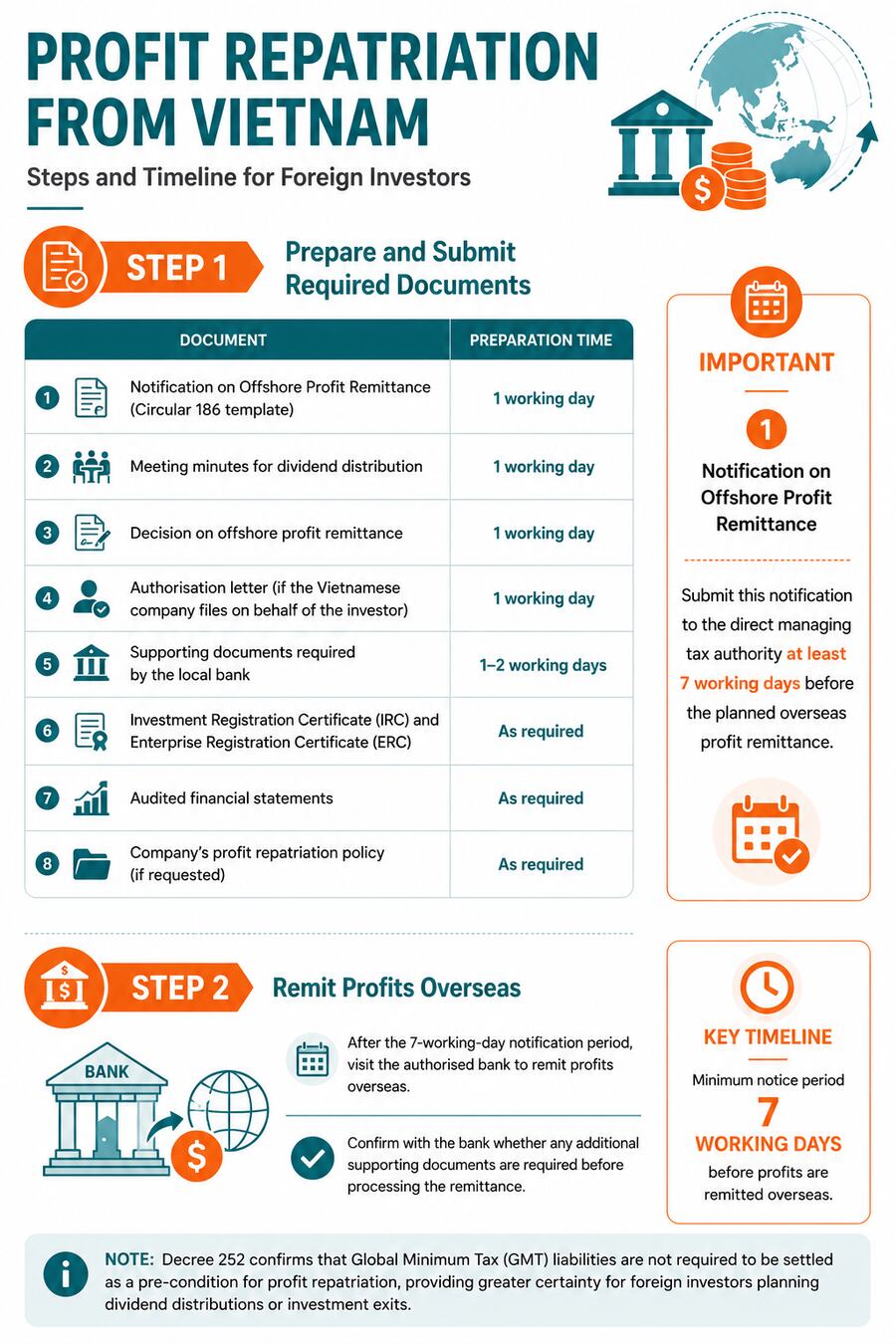
Note: Decree 252 confirms that Global Minimum Tax (GMT) liabilities are not required to be settled as a pre-condition for profit repatriation, providing greater certainty for foreign investors planning dividend distributions or investment exits.
Determination of the value of profits remitted abroad
The profit to be repatriated abroad is determined by the following formula:
Remitted profit = Annual abroad remitted profits – (Reinvested profit + Profit allocated for expenditures) + Other profit items
Where:
Annual abroad remitted profits: This refers to the profits earned by foreign investors in a fiscal year based on audited financial statements and tax declarations. The annual profits are determined according to the audit report and the finalisation of the corporation’s income tax each year.
Reinvested Profit: This refers to the profits that foreign investors have utilised or committed to reinvesting in Vietnam.
Profit allocated for expenditures: This refers to the profits that foreign investors have used for various business-related expenses or personal needs in Vietnam.
Other profit items: These items could include unremitted profits from previous years.
In accordance with Article 5 of Circular 186, foreign investors are required to either directly submit notifications or authorise the companies they have invested in to facilitate the submission of notifications regarding the remittance of profits abroad.
These notifications must adhere to the specific forms outlined in the Circular and should be directed to the relevant tax offices overseeing the enterprises in which foreign investors have invested.
It is essential that these notifications be lodged at least seven working days prior to the scheduled remittance of profits to ensure compliance with the regulatory framework.
Conclusion
Vietnam has established a structured framework for the repatriation of profits for foreign investors, ensuring compliance with regulations and financial obligations. The process requires foreign investors to fulfil tax liabilities, submit necessary documentation, and adhere to specific timelines to facilitate the transfer of profits. By following these guidelines, investors can efficiently repatriate their earnings while contributing to a transparent investment environment in Vietnam.
Key takeaways
Decree 252 incorporates profit repatriation rules into Vietnam’s tax administration framework for the first time.
Foreign investors may remit profits annually or upon terminating an investment project, provided all statutory tax and financial obligations have been fulfilled, and the tax authority is notified at least seven working days before the remittance.
Enterprises must have no outstanding tax debts at the time of annual profit remittance under the new rules. Those with accumulated losses remain prohibited from distributing or remitting profits.
This article was originally published on 24 March 2025. It was last updated on 31 July 2026.
For foreign investors, establishing a manufacturing facility in Vietnam requires careful planning across site selection, regulatory compliance, and operational feasibility.
Key takeaways
Vietnam offers multiple factory setup options, with ready-built factories enabling faster market entry and lower upfront investment.
Regulatory compliance remains essential, including licensing, environmental approvals, and fire safety requirements before operations can commence. Recent policy and trade developments are reshaping manufacturing location strategies, from provincial restructuring to evolving global trade dynamics.
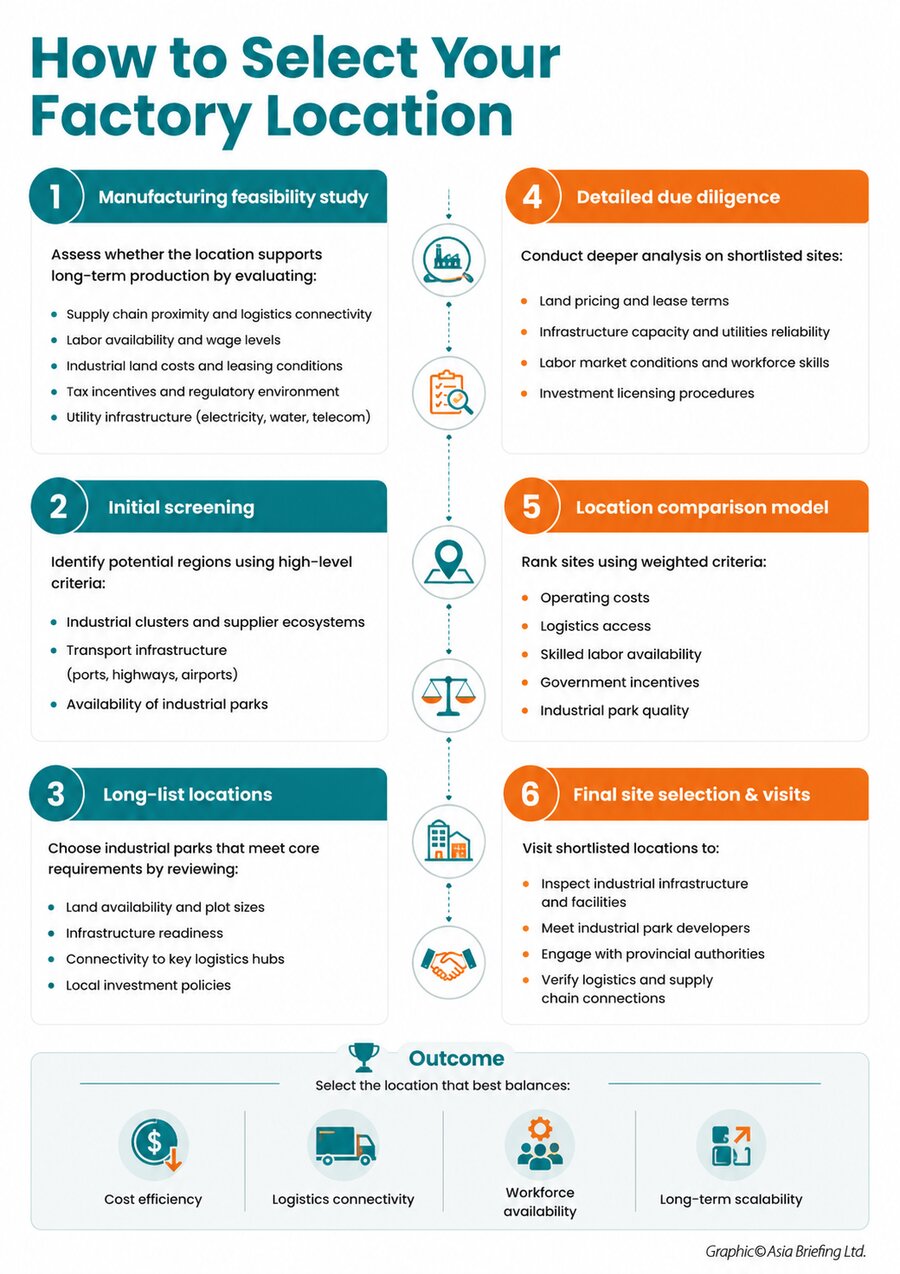
A structured site selection process helps manufacturers reduce risks, optimise costs, and build resilient, scalable operations in Vietnam.
Setting up manufacturing facilities in Vietnam
Foreign manufacturers entering Vietnam typically establish production facilities through two primary approaches: leasing industrial land to build a factory or renting a ready-built factory (RBF) within an industrial park.
Leasing industrial land
Leasing industrial land provides full control over factory design and production layout but involves higher upfront investment and longer timelines. Investors must secure land-use rights, obtain construction permits, and complete facility development, a process that can take 12 to 18 months.
Unlike land leasing, renting an RBF offers a faster and more flexible entry option. These facilities are pre-constructed and managed by industrial park developers, allowing manufacturers to begin operations more quickly, typically within six to nine months. As a result, RBFs have become increasingly popular among foreign investors seeking to establish production capacity rapidly while minimising capital expenditure.
Before committing to a factory rental, companies should conduct:
Market and location research, evaluating industrial zones based on logistics connectivity, infrastructure quality, and proximity to ports, airports, and suppliers.
Legal due diligence, verifying land-use rights, environmental permits, and zoning compliance.
Lease negotiations, covering rental rates, contract duration, and additional costs such as maintenance and utilities.
Infrastructure and workforce assessments, ensuring reliable utilities and sufficient local labour availability.
Once a facility is selected, investors typically sign a memorandum of understanding (MoU) and provide a deposit to reserve the property before finalising the lease agreement. Following this, companies must complete several regulatory steps before production begins, including establishing a local legal entity, obtaining fire safety approvals, securing environmental permits where required, and importing and installing machinery.
For many investors, the RBF model offers an efficient pathway to enter Vietnam’s manufacturing sector while maintaining flexibility for future expansion.
Notable trends affecting location selection
Trade policy developments and tariff adjustments
Trade policy developments and tariff changes are increasingly influencing manufacturing location choices, especially for export-focused investors considering supply chain resilience and market access. Despite global uncertainties, the trend of foreign manufacturers in Vietnam planning to expand over the next two years remains strong.
Industrial land absorption rates in both northern and southern regions remain below historical averages, helping to keep rental prices relatively stable and providing investors with greater flexibility when selecting locations. At the same time, demand for ready-built factories (RBFs) and ready-built warehouses (RBWs) is increasing, particularly in southern Vietnam, as companies seek faster market entry and greater operational flexibility amid evolving trade conditions.
Administrative decentralisation and provincial restructuring
The operation of newly merged provinces is reshaping the investment landscape. These changes may influence local investment incentive schemes, licensing procedures, and administrative coordination between authorities. Industrial park development plans are also being adjusted to align with new provincial boundaries and regional development strategies.
Growing warehousing demand driven by US trade flows
Increasing imports from the United States are driving stronger demand for logistics infrastructure. Vietnam’s application of zero-percent tariffs on US goods is expected to support import growth. As a result, demand for warehousing space and logistics services is expanding, particularly in areas near major ports and key consumption markets.
ESG and regulatory compliance
Environmental, social, and governance (ESG) regulations are becoming increasingly important for manufacturing investors. Industrial projects must comply with environmental impact assessment requirements, emissions standards, and waste management regulations, all of which can influence facility design, project timelines, and operating costs.
For international investors, Vietnam's different localities offer favorable conditions across almost every sector, particularly as the country shifts toward higher value-chain manufacturing, high-tech industries, and innovation. Taking a closer look at Vietnam's provinces and investment destinations before committing capital can provide a decisive competitive advantage. A tailored market study, dedicated location selection, or business matchmaking can uncover factors that are often hard to assess—such as special incentives, skilled labor availability, and tax breaks.
Vietnam’s regulatory authorities are sharpening their approach to corporate compliance, with tax and sector-specific regulators increasingly relying on risk-based management to identify businesses for inspection rather than conducting broad, routine audits.
Recent enforcement results from the tax authorities, together with new inspection plans announced by provincial regulators, indicate that businesses should expect more targeted scrutiny in areas ranging from taxation and related-party transactions to import-export activities, chemicals, energy efficiency, and industrial compliance.
Tax authorities shift towards risk-based supervision
The Department of Taxation has confirmed that tax administration is increasingly centred on risk management, using digital data analytics to identify taxpayers that warrant further review.
During the first six months of 2026, tax inspections and examinations resulted in authorities recommending tax collections, adjustments and penalties exceeding VND 34 trillion, while reducing declared losses and deductible VAT claims by significant amounts. According to the tax authority, inspection resources are increasingly allocated based on taxpayer risk profiles instead of random selection.
This reflects Vietnam’s broader tax administration reform, which aims to improve voluntary compliance while allowing authorities to focus enforcement efforts on businesses exhibiting higher compliance risks.
For foreign-invested enterprises (FIEs), multinational groups, and companies with complex cross-border operations, this means that documentation quality, transaction consistency, and digital tax data are likely to receive greater scrutiny.
Industry regulators are also adopting targeted inspections
The move towards risk-based oversight extends beyond taxation. Thanh Hoa province has approved a specialised inspection programme covering 87 enterprises and organisations during 2026 across multiple sectors under the authority of the Department of Industry and Trade. Rather than broad administrative reviews, inspections will focus on compliance with regulations governing:
Electricity;
Energy efficiency;
Chemicals;
Industrial explosives;
Import-export activities; and
Other specialised industry requirements.
Inspection periods will generally cover compliance from 1 January 2025 onwards, with each on-site inspection typically limited to no more than two working days unless otherwise required by law. Authorities also emphasised that inspections should avoid unnecessary overlap with other government inspection activities.
Although the programme applies specifically to Thanh Hoa, it illustrates a broader regulatory trend across Vietnam: inspections are becoming more targeted, data-driven, and sector-specific.
Explore vital economic, geographic, and regulatory insights for business investors, managers, or expats to navigate Vietnam’s business landscape. Our Online Business Guides offer explainer articles, news, useful tools, and videos from on-the-ground advisors who contribute to the Doing Business in Vietnam knowledge.
Compliance is becoming increasingly interconnected
An important implication for businesses is that compliance obligations can no longer be managed in isolation.
Tax authorities are gaining greater access to digital information from e-invoices, customs declarations, financial statements, and other government databases. At the same time, sector regulators are coordinating more closely across agencies, allowing inconsistencies between operational records and tax filings to become more visible.
For businesses operating in regulated industries, including manufacturing, chemicals, energy-intensive operations, and international trade, this increases the importance of maintaining consistent documentation across different regulatory functions.
Companies should also expect regulators to place greater emphasis on whether operational practices align with information reported through tax filings, customs declarations, licensing records, and other mandatory reporting systems.
As Vietnam strengthens its compliance framework, businesses should consider taking a more proactive approach to regulatory readiness by:
Reviewing tax compliance processes and supporting documentation before inspection notices are issued.
Conducting periodic internal compliance reviews covering both tax and industry-specific regulations.
Ensuring consistency between accounting records, customs documentation, operational reports, and tax filings.
Reassessing related-party transactions, transfer pricing documentation, and high-risk tax positions.
Maintaining organised documentation that can be readily produced during increasingly targeted inspections.
For foreign investors, the latest developments reinforce that compliance should be viewed not simply as an annual reporting exercise but as an ongoing governance function. As regulatory authorities continue to adopt digital tools and risk-based oversight, companies with stronger internal controls and documentation practices will be better positioned to respond efficiently when selected for inspection.
Managing accounting and bookkeeping in Vietnam requires close attention to local standards, reporting formats, and filing deadlines. When records are kept accurately and processes are well structured, businesses can avoid common compliance issues.
Vietnam’s e-commerce market continues to rank among Southeast Asia’s fastest-growing digital economies, underpinned by rising consumer spending, widespread digital adoption, and a supportive policy environment. As online retail evolves beyond rapid expansion, businesses are competing through operational excellence, trusted brands, and customer experience rather than price alone.
Plan Digital Expansion
Evaluate Vietnam's digital market potential, consumer demand, operating models, and regulations.
Vietnam’s e-commerce sector has entered a new stage of development, characterised by sustained double-digit growth and increasingly sophisticated consumer demand.
In 2025, Vietnam’s e-commerce market continued to expand, reaching an estimated value of US$38.5 billion, with an annual growth rate of 21 percent.
Although this marked the sector’s slowest growth rate in the past decade, the market has grown tenfold since 2015, from US$4 billion. It is projected to expand even further, reaching approximately 25 times its 2015 size by 2030.
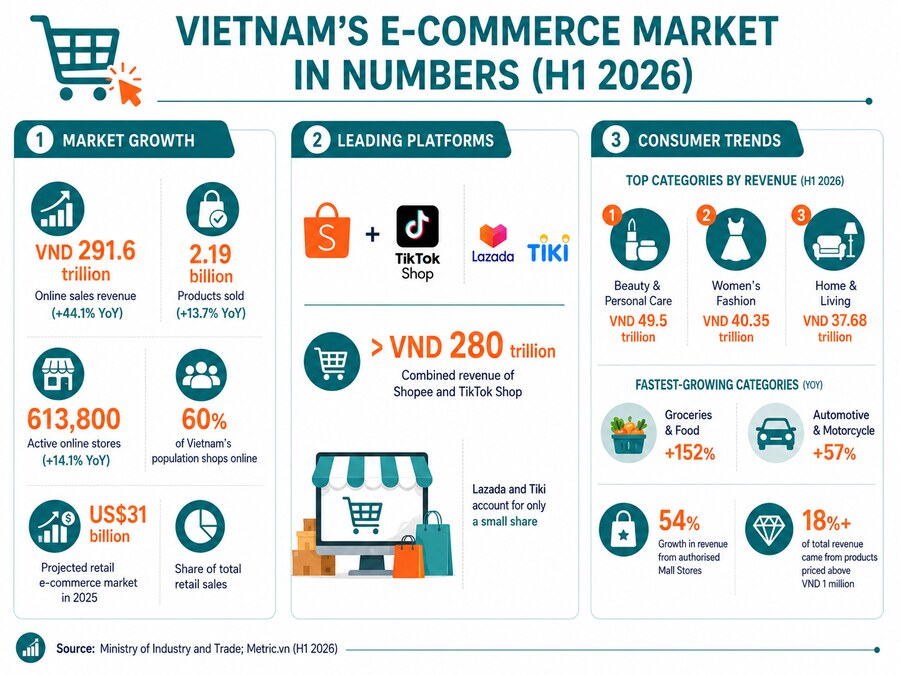
Vietnam’s e-commerce sector continues to be one of the fastest-growing in Southeast Asia, supported by rising digital adoption and changing consumer behaviour. Retail e-commerce sales are projected to reach US$31 billion in 2025, growing at an average annual rate of 25 percent.
The sector is expected to account for 11 percent of total retail sales, with around 60 percent of the population shopping online.
Despite higher platform fees and stricter operating requirements, the market maintained strong growth during the first half of 2026.
Revenue: VND 291.6 trillion (US$11 billion), up 44.1 percent year-on-year.
Products sold: 2.19 billion, an increase of 13.7 percent.
Active online stores: 613,800, up 14.1 percent year-on-year.
The continued growth in both revenue and transaction volume indicates that Vietnam’s e-commerce market is entering a more mature phase, with higher consumer participation and increasing spending per transaction.
Leading e-commerce platforms
Shopee and TikTok Shop dominate the market
Shopee and TikTok Shop remained Vietnam’s two largest e-commerce platforms in H1 2026, generating more than VND 280 trillion (US$10.6 billion) in combined revenue. Meanwhile, Lazada and Tiki accounted for only a small share of the market.
The platforms are also seeing a shift towards higher-value consumption:
Products priced above VND 1 million (US$38) contributed more than 18 percent of total platform revenue.
Revenue from authorised Mall stores surged 54 percent, despite a 6 percent decline in the number of sellers, reflecting growing consumer preference for genuine branded products.
Consumer demand shifts towards premium and essential products
Beauty products remained the largest online retail category, while groceries emerged as the fastest-growing segment.
Top categories by sales value:
Beauty and personal care: VND 49.5 trillion (US$1.87 billion)
Home and living: VND 37.68 trillion (US$1.43 billion)
Fastest-growing categories:
Groceries and food: +152 percent year-on-year
Automotive and motorcycle products: +57 percent year-on-year to VND 7.34 trillion (US$278 million)
These trends suggest consumers are purchasing more everyday necessities online while also showing greater willingness to spend on higher-value products.
Vietnam’s e-commerce development remains concentrated in major cities
The Vietnam E-Business Index 2026 shows that e-commerce development remains heavily concentrated in the country’s largest economic centres, despite continued digitalisation nationwide. The index measures provincial performance across three dimensions: human resources and IT infrastructure, business-to-consumer (B2C) transactions, and business-to-business (B2B) e-commerce.
Ho Chi Minh City ranked first with 91.1 points, maintaining its position as Vietnam’s leading e-commerce hub.
Hanoi followed with 87.5 points, reflecting its strong digital infrastructure and business ecosystem.
Da Nang placed third with 22.3 points, highlighting a sharp drop from the two leading cities.
The national average score stood at 15.8 points, underscoring the wide disparity in e-commerce readiness across Vietnam. The gap between Ho Chi Minh City and the lowest-ranked province reached 86.9 points, indicating that digital infrastructure, technology adoption, and online business capabilities remain unevenly distributed.
For businesses, the rankings reinforce that while Ho Chi Minh City and Hanoi remain the country’s primary digital commerce markets, significant untapped opportunities exist as other provinces continue to strengthen their digital capabilities.
Latest trends in Vietnam’s e-commerce sector
Competition shifts from price to operational excellence
Vietnam’s e-commerce market is entering a more mature stage, with competition increasingly centred on operational capabilities, seller quality, and consumer trust rather than aggressive price promotions.
Leading platforms and sellers are responding by strengthening their operating models:
Platforms are investing in AI-powered recommendations, integrated advertising tools, and logistics optimisation to improve fulfilment efficiency and customer experience.
Sellers are increasingly prioritising profitability over sales volume through omnichannel strategies, automation, and data-driven marketing to improve customer retention.
At the same time, the competitive landscape is evolving alongside greater regulatory oversight.
Key developments include:
Shopee and TikTok Shop increased seller commissions and platform fees during H1 2026, prompting Vietnam’s National Competition Commission to assess their impact on merchants, consumers, and market competition. The commission subsequently requested Shopee to review and postpone parts of its revised fee structure.
Revenue from imported products sold by overseas merchants on Shopee declined 23.4 percent, while sales volume fell 56.9 percent year-on-year, suggesting stronger demand for locally available and officially distributed products.
Revenue across Vietnam’s four largest e-commerce platforms is forecast to reach VND 146.3 trillion (US$5.54 billion) in Q3 2026, supported by seasonal demand from summer travel and the back-to-school shopping season.
This combination of operational investment, regulatory oversight, and evolving consumer preferences indicates that competitive advantage is increasingly determined by execution, product authenticity, and the ability to deliver a seamless end-to-end shopping experience, rather than by price alone.
Social networks remain the leading sales channel
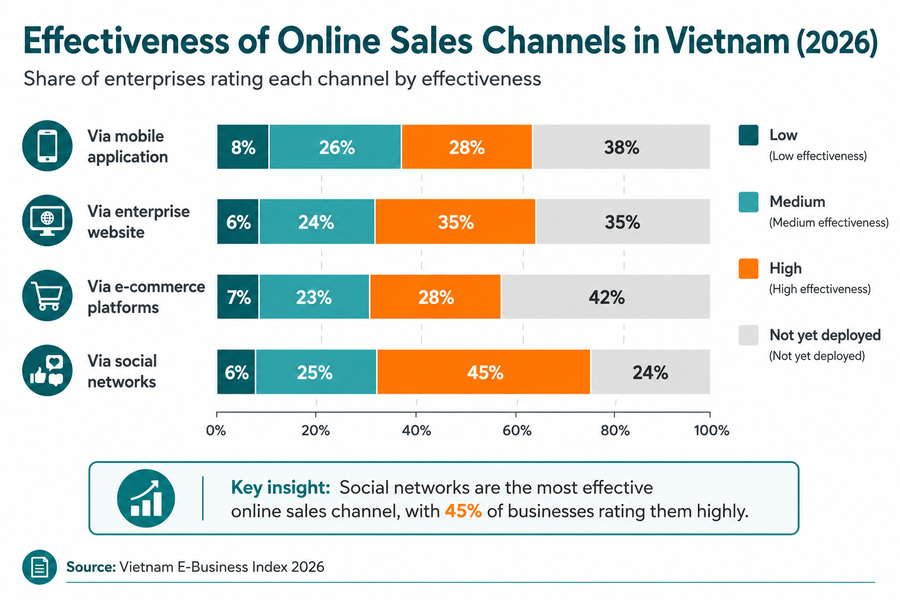
Social media continues to outperform other digital channels in driving online sales. According to the Vietnam E-Business Index 2026, 45 percent of businesses rated social networks as highly effective for selling products online, compared to 35 percent for enterprise websites and 28 percent for both e-commerce marketplaces and mobile applications.
The growing popularity of livestream shopping, influencer marketing, and social engagement has made social platforms a key channel for product discovery and customer acquisition, particularly among younger consumers.
Consumer trust is becoming the key competitive advantage
Vietnamese consumers are placing greater emphasis on authenticity and shopping experience than on discounts alone. Product quality, seller credibility, and product variety remain the top factors influencing purchasing decisions, while the biggest concerns are products not matching their descriptions and personal data privacy.
Vietnam strengthens its position as an e-commerce export hub
Vietnam is also emerging as a regional hub for cross-border e-commerce, supported by its competitive manufacturing base, digital transformation, and export-oriented economy. At the Amazon Global Selling Conference 2025, Amazon identified Vietnam as one of its fastest-growing sourcing markets, citing strong growth in Vietnamese product listings and brand-registered sellers.
As more local businesses adopt digital export channels and global marketplaces expand their presence, Vietnam is expected to play an increasingly important role in regional and global e-commerce supply chains.
What businesses should watch to succeed in Vietnam’s e-commerce market
While Vietnam’s e-commerce sector continues its rapid growth, it faces several significant challenges that warrant strategic attention.
Generational consumer gap
Consumer habits present both opportunities and limitations. On one hand, younger, digitally-native consumers fuel growth. On the other hand, middle-aged and elderly segments remain less comfortable with online shopping, limiting the total reachable market for pure-play e-commerce. This generational adoption gap means platforms must still invest heavily in education, localization, trust-building, and UX design to expand beyond the urban-youth core.
Talent shortages
Human resources are a constraint. Vietnam’s e-commerce firms face a shortage of skilled professionals, especially in areas such as data analytics, omnichannel fulfilment, AI-driven personalization, and global supply-chain management. This talent gap makes it harder to scale globally, adopt best practices from advanced markets, and maintain operational excellence.
Logistics bottlenecks
Logistics and infrastructure remain a structural hurdle and an opportunity at the same time. While Vietnam has made strong strides in delivery networks and fulfilment, the warehousing, last-mile delivery, rural coverage, and cold-chain logistics systems are not yet at the level of more mature e-commerce markets.
Sustainability pressures
Rising awareness of sustainability issues is emerging. A 2025 report by the Vietnam E‑commerce Association (VECOM) points out that the rapid growth of online business and food-delivery services consumed more than 332,000 tons of packaging materials in 2023 alone – 171,000 tons of which were plastic. As consumer and regulatory attention heightens, platforms and sellers will need to integrate greener practices into logistics, packaging, and returns operations.
Explore vital economic, geographic, and regulatory insights for business investors, managers, or expats to navigate Vietnam’s business landscape. Our Online Business Guides offer explainer articles, news, useful tools, and videos from on-the-ground advisors who contribute to the Doing Business in Vietnam knowledge.
With a young population, rising disposable incomes, and a rapidly expanding middle class, Vietnam continues to stand out as one of Southeast Asia’s most attractive destinations for e-commerce investment. Its growing role as a regional e-commerce export hub further strengthens the country’s long-term outlook, positioning Vietnam as a market to watch in 2026 and beyond.
Yet, realizing this potential will require more than simply riding the momentum. While Vietnam’s e-commerce market offers remarkable expansion potential, success will depend on navigating intense competition, staying ahead of regulatory change, broadening consumer adoption beyond younger segments, developing talent and logistics systems, and addressing emerging sustainability expectations.
Those who approach Vietnam with a long-term, well-structured plan and the right local partnerships are poised to benefit from one of the region’s most dynamic digital economies.
This article was originally published on 20 August 2024. It was last updated on 29 July 2026.
Setting up a business in Vietnam requires navigating company registration, local approvals, and work permit processes. We help FDI companies by preparing and submitting documentation, coordinating with authorities, and ensuring compliance, so they can start operations smoothly and focus on growth.
Vietnam aspires to attain upper-middle-income status by 2030 and to achieve high-income country status by 2050. The middle class in Vietnam is expected to expand to 26 percent of the population by 2026, up from 13 percent (approximately 13 million people) in 2023, creating significant opportunities for businesses.
Key takeaways
Vietnam’s consumer market is entering a new growth phase, supported by sustained economic expansion, rising incomes, and an expanding middle class.
The middle class is projected to reach 26 percent of the population by 2026, creating a larger consumer base with greater purchasing power and demand for higher-value products and services.
Consumer spending is becoming more sophisticated. While price remains the primary purchasing factor, consumers increasingly prioritise quality, convenience, health, sustainability, and trusted brands.
Vietnam has officially been reclassified by the World Bank as an upper-middle-income economy, marking a significant milestone in its economic development. The upgrade follows an increase in gross national income (GNI) per capita from US$4,490 in 2024 to US$4,970 in 2025, driven by sustained economic growth and strong export performance.
The new classification reflects Vietnam’s improving purchasing power and expanding consumer market. Coupled with rising household incomes and a growing middle class, it reinforces the country’s long-term potential for consumer-facing industries.
Vietnam’s economic growth remains on a robust trajectory as the country’s gross domestic product (GDP) grew 8.18 percent in H1 2026.
Vietnam’s ascendance in the global supply chain has been pivotal to its economic growth, driven by its manufacturing and export sectors. From 2012 to 2022, Vietnam’s exports expanded at an average annual rate of 12 percent, significantly outpacing the global average growth rate. The momentum continues as the country’s export turnover reached nearly US$266.5 billion in the first half of 2026, an increase of 21 percent year on year, according to the General Department of Customs.
Major multinational corporations, such as Samsung, Google, Microsoft, Apple, Nike, and Adidas, among others, have increasingly integrated Vietnam into their supply chains as part of diversified strategies like “China plus one.”
Foreign direct investment (FDI) into Vietnam continues to exhibit robust growth, reaching a total registered capital of US$34.65 billion by the end of June 2026, up 61 percent from a year earlier. While the number of newly approved projects edged up only 1.3 percent, newly registered capital jumped 87.2 percent to US$17.39 billion.
Explore vital economic, geographic, and regulatory insights for business investors, managers, or expats to navigate Vietnam’s business landscape. Our Online Business Guides offer explainer articles, news, useful tools, and videos from on-the-ground advisors who contribute to the Doing Business in Vietnam knowledge.
According to the General Statistics Office (GSO), the average monthly income of Vietnamese workers reached VND 9.0 million (approximately US$344) in the first half of 2026, up VND 717,000 (8.7 percent) from the same period in 2025. Although average income in Q2 2026 eased slightly from the previous quarter, it remained significantly higher than a year earlier.
The sustained rise in incomes reflects improving purchasing power and a growing capacity for discretionary spending, supporting demand across sectors such as retail, consumer goods, healthcare, education, and leisure. This trend is reinforced by Vietnam’s expanding middle class and broader transition to an upper-middle-income economy, reflecting sustained economic growth and rising living standards.
Demographic trends further enhance this outlook. With a population approaching 102 million and a projected median age of 33.9 in 2026, Vietnam remains one of Asia’s youngest large consumer markets. Its relatively youthful, increasingly urbanised, and digitally connected population is driving the adoption of e-commerce, digital payments, and premium consumer products, making the country an attractive destination for businesses targeting long-term consumption growth.
Vietnam’s expanding middle class underpins long-term consumer demand
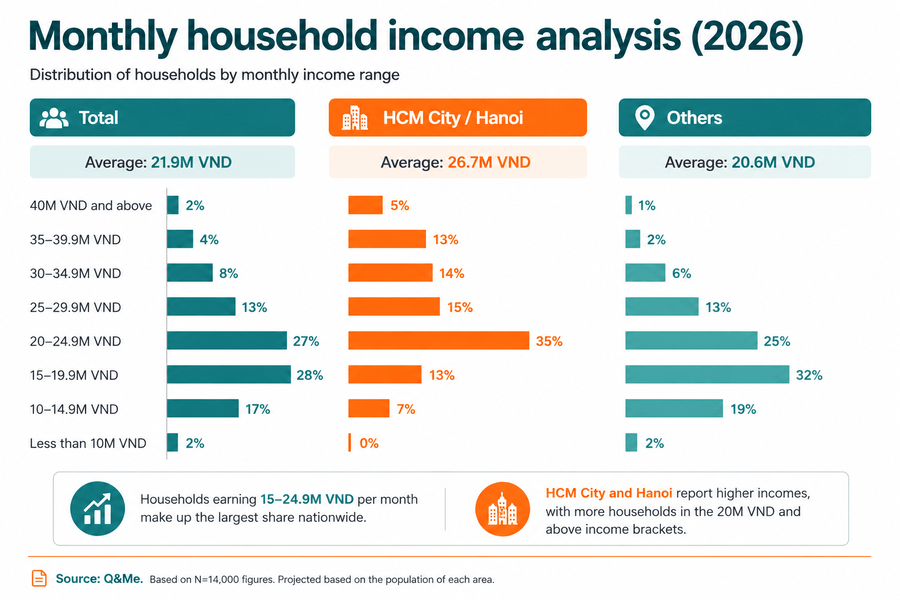
Vietnam’s consumer market is being supported by a steadily expanding middle class with rising purchasing power. According to a 2026 Q&Me survey covering more than 14,000 respondents, average household income reached VND 21.9 million (US$831) per month, up from VND 21.3 million in 2025, reflecting continued income growth rather than a short-term spike.
Several demographic trends highlight the evolution of Vietnam’s middle-income segment:
Middle-income households are becoming the dominant consumer group. The largest income bracket nationwide is households earning VND 15–24.9 million per month, accounting for more than half of all households surveyed, while the VND 20–30 million segment continues to expand.
Income remains concentrated in major cities. Average monthly household income reached VND 27.5 million in Ho Chi Minh City and VND 25.9 million in Hanoi, compared with the national average of VND 21.9 million, indicating that the country’s largest urban centres remain the primary markets for premium goods and services.
Affluent consumer segments are deepening. Ho Chi Minh City has the highest concentration of households earning above VND 30 million per month, while Hanoi’s income distribution is centred on the VND 20–29.9 million range, suggesting growing demand for higher-value products and experiences.
What are Vietnamese consumers spending on?
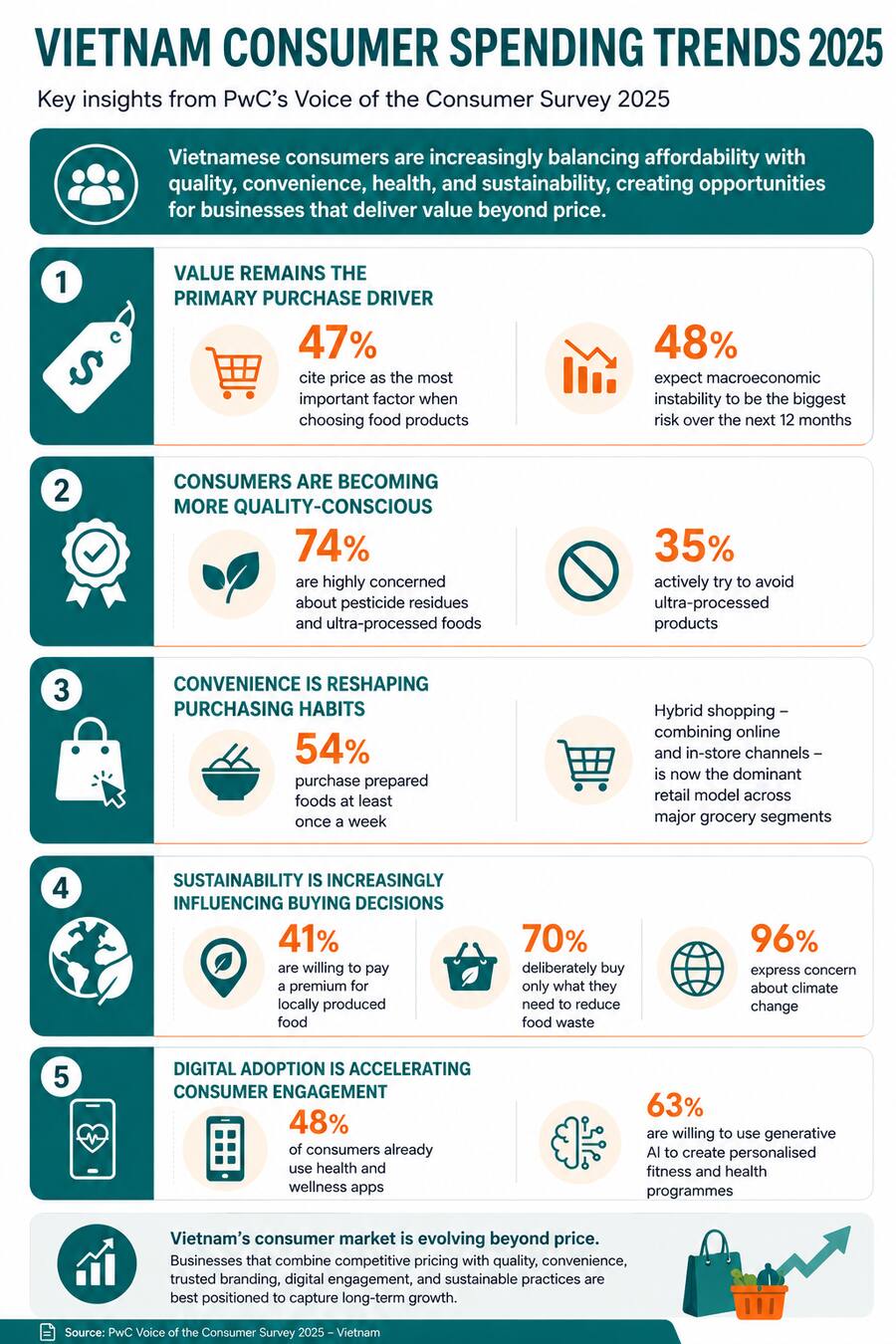
Vietnam’s rising incomes are translating into stronger consumer demand, but purchasing behaviour is becoming more discerning. According to PwC’s Voice of the Consumer Survey 2025, consumers are increasingly balancing affordability with quality, convenience, health, and sustainability, creating opportunities for businesses that deliver value beyond price.
Key consumer spending trends include:
Value remains the primary purchase driver, with 47 percent of Vietnamese consumers cite price as the most important factor when choosing food products.
Consumers are becoming more quality-conscious, as 74 percent are highly concerned about pesticide residues and ultra-processed foods, and 35 percent actively try to avoid ultra-processed products.
Convenience is reshaping purchasing habits. While 54 percent of surveyed consumers purchase prepared foods at least once a week, hybrid shopping has become the dominant retail model across major grocery segments.
Sustainability is increasingly influencing buying decisions as most consumers deliberately buy only what they need to reduce food waste and express concern about climate change.
Digital adoption is accelerating consumer engagement, highlighting growing openness to AI-enabled consumer services and personalised digital experiences.
Together, these trends suggest Vietnam’s consumer market is moving beyond price-led competition. As incomes and the middle class continue to expand, businesses that combine competitive pricing with quality, convenience, trusted branding, and digital engagement are likely to be best positioned for long-term growth.
Opportunities for foreign businesses in Vietnam
Vietnam’s expanding middle class, rising incomes, and increasingly sophisticated consumer preferences are creating new opportunities for foreign brands. To capture long-term growth, businesses should consider:
Target the growing middle class with value-for-money products that balance affordability and quality.
Expand premium offerings, particularly in food and beverage, beauty, healthcare, and lifestyle products, as consumers increasingly spend on quality, health, and convenience.
Adopt an omnichannel strategy by integrating e-commerce with physical retail to meet evolving shopping habits.
Look beyond major cities, as rising incomes in tier-2 and tier-3 markets are broadening consumer demand.
Emphasise health, sustainability, and trusted branding, as these factors are becoming increasingly important alongside price.
As Vietnam transitions to an upper-middle-income economy, businesses that combine competitive pricing with strong branding, digital engagement, and products tailored to local preferences will be best positioned to succeed.
FAQ - Vietnam’s Middle Class – Business Essentials
Q1: How large is Vietnam’s middle class?
Vietnam’s middle class is expanding rapidly as incomes continue to rise. It is projected to account for 26 percent of the population by 2026, up from 13 percent (around 13 million people) in 2023. This growing consumer segment is expected to drive long-term demand for higher-value goods and services as Vietnam advances towards its goal of becoming an upper-middle-income economy by 2030.
Q2: What are the key spending trends among Vietnamese consumers?
Vietnamese consumers are becoming more discerning in their purchasing decisions. While price remains the primary purchase driver, consumers increasingly seek products that combine affordability with quality, convenience, health, and sustainability. Omnichannel shopping and digital engagement are also becoming integral to the consumer journey.
Q3: Which consumer segments offer the greatest market potential?
The VND 15–24.9 million monthly household income bracket is now Vietnam’s largest consumer segment, while higher-income households continue to grow in Ho Chi Minh City and Hanoi. At the same time, rising incomes in tier-2 and tier-3 cities are creating new opportunities as purchasing power expands beyond the country’s largest metropolitan areas.
Q4: Which sectors offer the strongest opportunities for foreign businesses?
Rising incomes and an expanding middle class are supporting demand across consumer goods, food and beverage, beauty and personal care, healthcare, education, retail, and lifestyle services. Businesses that deliver value for money while differentiating through quality, innovation, and trusted branding are well positioned to capture market growth.
Q5: What strategies should companies adopt to succeed in Vietnam’s consumer market?
Businesses should develop products that balance affordability and premium quality, strengthen omnichannel distribution, expand into emerging urban markets, and align offerings with consumers’ growing focus on health, convenience, sustainability, and personalised experiences.
Ready to Tap into Vietnam’s Middle-Class Growth Story?
As Vietnam’s consumer landscape evolves, businesses that act early will capture the most value. Our experts at Dezan Shira & Associates help foreign companies navigate Vietnam’s regulatory, tax, and market-entry landscape with:
Consumer market analysis tailored to your industry
Market entry and expansion strategy across Vietnam’s cities and provinces
Partner identification and business matchmaking
Cross-border business structuring to scale in ASEAN
Contact us today to discuss your entry strategy or request a customized Vietnam market opportunity report at: Vietnam@dezshira.com
This article was originally published on 5 July 2024. It was last updated on 28 July 2026.
Setting up a business in Vietnam requires navigating company registration, local approvals, and work permit processes. We help FDI companies by preparing and submitting documentation, coordinating with authorities, and ensuring compliance, so they can start operations smoothly and focus on growth.
The United States has imposed a 12.5 percent Section 301 tariff on imports from Vietnam following its investigation into forced labour import prohibitions. While selected products are exempt, the new measures introduce additional trade compliance considerations for Vietnamese exporters and manufacturers serving the US market.
Key takeaways
The US has imposed a 12.5 percent Section 301 tariff on imports from Vietnam, following its investigation into Vietnam’s enforcement of forced labour import prohibitions.
The tariff does not apply to all products. Selected goods are exempt under Annex I and Annex II based on supply chain, economic, and policy considerations.
Affected products entering US Foreign Trade Zones must generally be admitted under “privileged foreign status,” limiting opportunities to mitigate tariffs through FTZ processing.
On 24 July 2026, the Office of the United States Trade Representative (USTR) announced new Section 301 tariff measures targeting imports from 60 trading economies, including Vietnam, following investigations into their enforcement of prohibitions on goods produced with forced labour.
Under the measures, most imports from Vietnam will be subject to an additional 12.5 percent tariff, although certain products are exempt. The tariffs took effect as the temporary 10 percent global tariff expired, marking a shift towards country-specific trade restrictions after the US Supreme Court’s February ruling invalidated the President’s earlier “reciprocal” tariff regime.
The measures stem from a Section 301 investigation launched in March 2026, which concluded that Vietnam had not sufficiently enacted or enforced restrictions on imports linked to forced labour. Later, on 2 June 2026, USTR released the findings of 60 separate Section 301 investigations launched in March 2026. The investigations examined whether major US trading partners have adopted and effectively enforced measures preventing the importation of goods produced with forced labor.
According to USTR, the failure of trading partners to restrict forced labor-related imports creates an “unlevel playing field” for US workers and businesses by allowing products made with artificially lower labor costs to enter global supply chains. Vietnam was included alongside economies such as China, India, Japan, South Korea, Thailand, Malaysia, the European Union, Canada, Mexico, and the United Kingdom.
Businesses exporting to the US should therefore reassess supply chain traceability, supplier due diligence, and trade compliance processes to mitigate potential tariff exposure.
More broadly, the latest action establishes a country-by-country enforcement framework rather than a uniform tariff regime, with duty rates, product coverage, and available exemptions differing across the affected trading partners.
Understanding Section 301
Section 301 of the US Trade Act of 1974 authorizes USTR to investigate foreign government acts, policies, or practices that are considered unreasonable, discriminatory, or burdensome to US commerce.
Where a violation is found, the US government may impose responsive measures, including additional tariffs or other trade restrictions. Section 301 has previously served as the legal basis for tariffs imposed on Chinese imports during the US-China trade dispute.
Why is Vietnam included?
The investigation focuses on whether countries maintain and effectively enforce restrictions on imports made with forced labor.
USTR argues that many economies, including Vietnam, either lack comprehensive prohibitions or do not effectively enforce existing measures against forced labor-linked imports. The agency concluded that these shortcomings may allow goods produced through forced labor to enter international supply chains and compete unfairly with U.S. products.
The determination does not accuse Vietnam of systematically using forced labor. Rather, it assesses Vietnam’s regulatory approach to preventing the importation of goods produced with forced labor from third countries.
Explore vital economic, geographic, and regulatory insights for business investors, managers, or expats to navigate Vietnam’s business landscape. Our Online Business Guides offer explainer articles, news, useful tools, and videos from on-the-ground advisors who contribute to the Doing Business in Vietnam knowledge.
Under the USTR determination, imports from Vietnam will be subject to a 12.5 percent Section 301 tariff, except for products specifically excluded under Annex I and Annex II, Part A of the notice.
According to the USTR, the tariff rate and the scope of the product exemptions were determined to be appropriate for addressing the actionable acts, policies, and practices identified during the Vietnam investigation.
Product exemptions apply
The Section 301 tariffs do not apply universally. The USTR has exempted selected products where tariffs could:
Disrupt US supply chains or domestic production;
Cause broader economic disruption;
Apply to products that cannot be sourced in sufficient quantities from the United States or alternative suppliers;
Be ineffective in achieving the objectives of the investigation; or
Support trading partners’ commitments to strengthen forced labour import prohibitions.
The excluded products are listed in Annex I and Annex II of the USTR notice and will be reflected in updates to the Harmonized Tariff Schedule of the United States (HTSUS).
Foreign trade zone rules tightened
The notice also changes the treatment of affected imports entering US Foreign Trade Zones (FTZs).
Products subject to the additional Section 301 tariff must generally be admitted under “privileged foreign status”, except for goods eligible for “domestic status” under US customs regulations. This means the tariff classification and applicable duty rate are fixed when the goods enter the FTZ and generally cannot be altered through processing or manufacturing activities within the zone.
For businesses using FTZs as part of their US distribution or manufacturing strategy, the provision limits opportunities to mitigate the additional tariff through customs procedures.
Tariff measures apply independently to each economy
The USTR also clarified that each of the 60 Section 301 investigations is legally separate.
As a result:
Tariffs imposed on Vietnam apply independently of measures affecting other economies;
Product exemptions granted to one economy do not automatically extend to another; and
Any successful legal challenge against the tariff measures for one country would not automatically invalidate the tariffs or exemptions applicable to Vietnam.
The notice includes a severability provision intended to ensure that if a court invalidates one tariff measure or exemption, the remaining tariff actions continue to apply unless separately overturned.
Manage US Trade Compliance Risks
As US scrutiny of supply chains intensifies, businesses should proactively assess their exposure to tariffs, forced labor compliance requirements, and sourcing risks.
Alongside the Section 301 tariff rate proposal, the USTR previously also proposed a special mechanism for textile and apparel imports. Under this proposal, a designated volume of textile and apparel products could qualify for a reduced Section 301 tariff rate based on the importing country’s purchases of US-origin textile inputs, including cotton and man-made fibers.
According to the latest notice, the Presidential Memorandum directs the USTR to establish a three-year tariff-rate quota (TRQ) programme for textile and apparel imports from Bangladesh, Cambodia, Indonesia, and Malaysia once implementation is determined to be feasible. Vietnam is not included in this mechanism.
Under the TRQs, a specified volume of textile and apparel exports from these four economies will be eligible to enter the United States free of the new Section 301 tariffs, provided they meet sourcing thresholds for US-origin textile goods or cotton. The mechanism is intended to encourage greater use of US-made inputs while reducing reliance on supply chains considered more likely to involve forced labour.
Until the TRQs are established and take effect, the relevant textile and apparel imports from Bangladesh, Cambodia, Indonesia, and Malaysia will remain subject to the applicable Section 301 tariffs. The USTR will publish a separate Federal Register notice once the TRQs and their effective dates are finalised.
As Vietnam is not covered by the TRQ programme, its textile and apparel exports will remain subject to the standard Section 301 tariff measures, except where product-specific exclusions apply. If implemented, the TRQs could improve the competitive position of the four participating economies relative to Vietnamese exporters in the US market.
Business implications for Vietnam exporters
The announcement establishes 12.5 percent as the default additional Section 301 tariff for Vietnamese exports to the United States, unless a product qualifies for an exemption.
Vietnamese exporters and multinational manufacturers should therefore review:
Whether exported products are covered by the exemption lists in Annex I or Annex II;
The applicable HTSUS classification for each product;
The impact of the additional tariff on pricing, contracts, and supply chains;
Whether products imported through US Foreign Trade Zones remain commercially viable under the new customs treatment; and
Potential adjustments to sourcing, production, or distribution strategies.
Because the measures combine country-specific tariffs with product-level exemptions, businesses should assess tariff exposure on a product-by-product basis rather than assuming the 12.5 percent duty applies uniformly across all exports.
Outlook
The latest Section 301 action signals a more targeted US trade enforcement approach, combining country-specific tariff measures with tailored product exclusions. For Vietnam-based exporters, compliance will increasingly depend not only on country of origin but also on product classification, exemption eligibility, and customs planning.
Companies exporting to the US should monitor future amendments to the HTSUS and any updates to the exemption lists, while reviewing supply chain strategies to manage the potential commercial impact of the new tariff regime.
This article was first published on June 4, 2026, and was last updated on July 26, 2026.
Managing tax in Vietnam is critical for FDI companies to stay compliant with local regulations, GST requirements, and global standards such as IFRS, navigate complex filings, and apply correct tax treatments. A well-structured tax process helps to avoid penalties and stay 100% compliant.